 BALL AI
A home practice plan is a short list you can finish. This template is for parents and for youth players who train in a driveway, a garage, or at a park hoop. Print this page, pick one length, and stop when the plan says stop. The three versions are 30, 45, and 60 minutes. Each uses the same blocks: warm-up, ball handling, shooting, finishing, conditioning, and cooldown. The weekly schedule and the age notes keep a 9-year-old and a 15-year-old from getting the same day.
You need a ball that fits their hand, a flat space, water, and shoes with tread. Shooting and finishing need a hoop. Handles, the warm-up, and most of the cooldown do not. If you cannot get to a basket today, extend the handle block and skip those two rows. How-tos and rep targets by age are in basketball drills for kids at home. How to talk about a miss without turning practice into a test is in how to help your kid get better at basketball.
How to use this template
Pick the length before you walk outside. A 30-minute plan on a school night beats a 60-minute plan that dies at minute 20. Write the choice on the sheet so nobody renegotiates it after the first miss. One focus per block. If the day is handles, shooting stays close. If the day is form, handles stay stationary. Count clean reps. When the ball gets away or the elbow flares, end that block and move on.
Parents set up the space and the clock. Players do the reps. Name one cue, then stay quiet. Younger kids need you nearby. Older ones can run the sheet while you are home if the space is familiar. Before you add a camp or a trainer on top of this week, read youth basketball training: home, camps, or a trainer.
What to have ready
Clear bikes, hoses, and toys. Bring water. Match the ball to the one they use with their team. Many boys move to a size 7 around age 12, and a lot of girls use a size 6 from about age 9. A ball that is too big makes every block look harder than it is. Sizes and a simple phone stand are in the basketball gift guide.
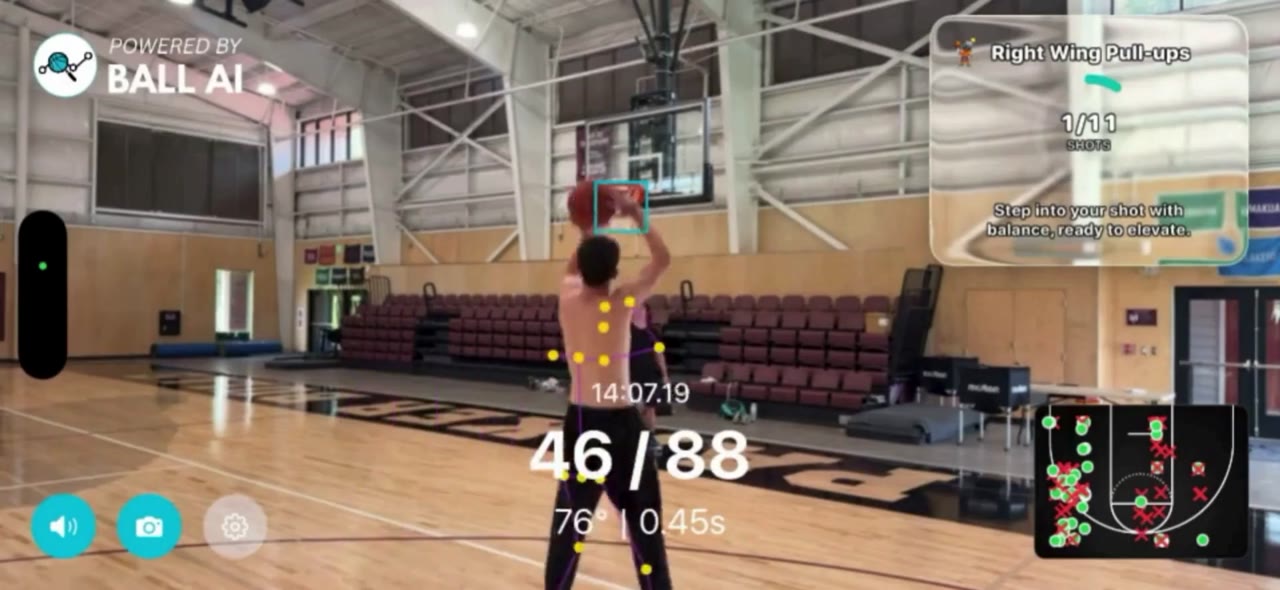
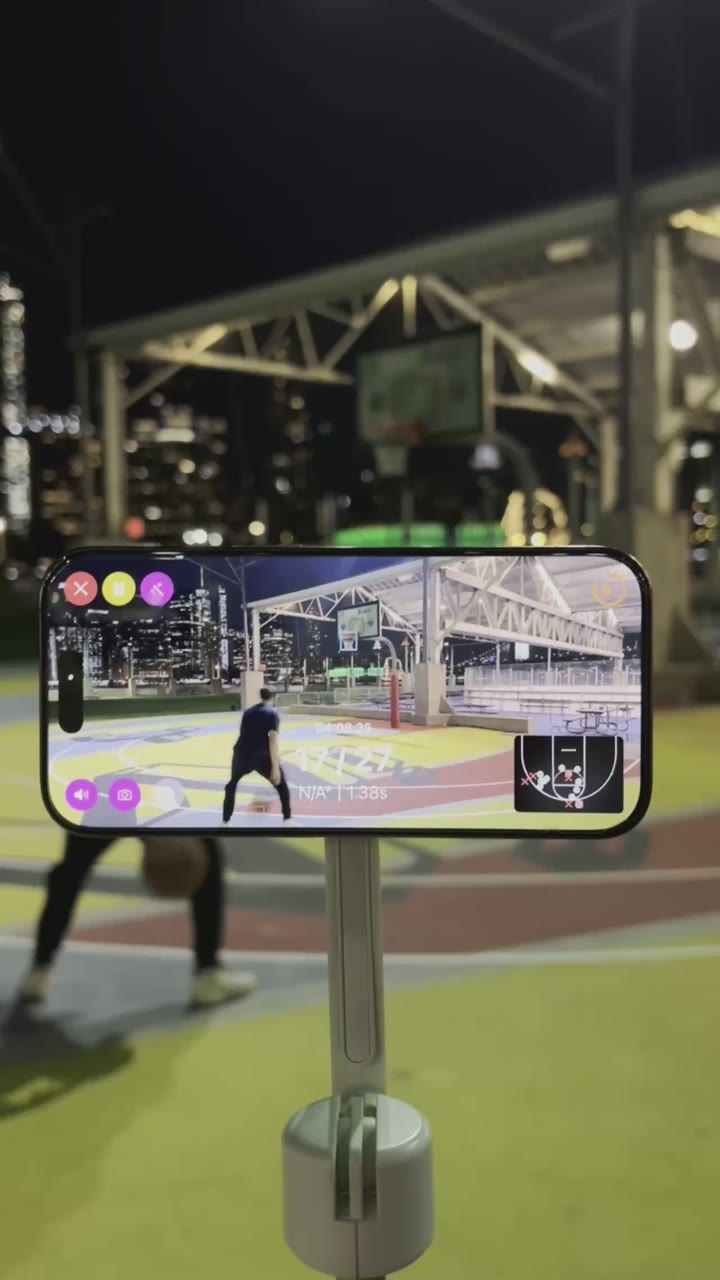
Set a phone where it can see the ball, about chest height, if you want a record without counting out loud. Ball AI is an AI coach on the phone camera that tracks reps: shots and dribbles, on iOS and Android, with no sensor and no special ball. Straight answers on ages and the camera are in the basketball training app for kids FAQ. The app does not replace you next to a younger kid, and it does not replace playing.
The 30-minute home practice plan
Use this on school nights, after a team practice, or any day the calendar is already full. It is a complete session. Do not add a second workout because it felt short.
| Block | Time | What to do |
|---|---|---|
| Warm-up | 4 min | Easy jog or skips, 10 arm circles, 8 squats, then 20 fingertip pounds each hand. Eyes up. |
| Ball handling | 7 min | Stationary pounds, then 10 crossovers. Weak hand matches the strong hand. Feet stay planted. Slow down if the ball hits a foot. |
| Shooting | 8 min | About 20 form shots close to the rim, one spot. Hold the follow-through. Elbow under the ball. No long shots. |
| Finishing | 5 min | Six layups each side, same foot every time. No hoop: walk through the gather and a balanced stop, 8 each side. |
| Conditioning | 3 min | Four slow defensive slides across the space and back. Stay low. Feet do not cross. |
| Cooldown | 3 min | Walk, shake out the hands, easy lunges, water. Say today's one cue once, then stop. |
After the cooldown, they are done. A couple of free shots only if they ask. If form fell apart in shooting, the next session starts closer to the rim, not farther away.
The 45-minute home practice plan
Use this on a quiet afternoon when they are fresh. If they had a hard practice or a game yesterday, stay at 30 minutes. A full 45 on sore legs is how kids start walking past the ball.
| Block | Time | What to do |
|---|---|---|
| Warm-up | 5 min | Jog, arm circles, squats, then light pounds into a few easy crossovers. Stop while they still look loose. |
| Ball handling | 10 min | Two sets of stationary pounds, then crossovers and one combo they already know. Walk only after the ball stays quiet. Weak hand matches the strong hand. |
| Shooting | 12 min | Close form for the first half. If those reps look the same, take one step back, still in a comfortable range. Hold the finish. Write the makes down. |
| Finishing | 8 min | Layups from each side, then a one-dribble finish if the footwork stayed clean. Same foot from a given side. If they travel, drop the dribble. |
| Conditioning | 5 min | Slides down and back, twice, with a rest. Add a few small two-foot landings only if the slides looked balanced. |
| Cooldown | 5 min | Walk, easy lunges, water. Write one number: clean reps, close makes, or whether the pivot foot stayed down. |
The 60-minute home practice plan
Save the hour for an off-day when they slept and they asked to train. An hour is plenty at home. Drink water between shooting and finishing. If attention drops, cut conditioning first.
| Block | Time | What to do |
|---|---|---|
| Warm-up | 6 min | Jog, skips, arm circles, squats, fingertip pounds, and a few half-speed slides. Warm, not tired. |
| Ball handling | 14 min | Pounds, crossovers, between the legs, and one combo. Add a controlled walk only if the stationary work was clean. Rest between sets. |
| Shooting | 16 min | Close form for the first 8 minutes, then one or two game spots. One cue for the block: elbow, balance, or the follow-through. |
| Finishing | 10 min | Layups both sides, then a gather from a dribble. Stop when the steps get loud. Footwork stays the same each rep. |
| Conditioning | 8 min | Slides and a few short sprints to a line and back, with a real rest. If they cannot hold form, the block is over. |
| Cooldown | 6 min | Walk until breathing settles. Easy lunges, water, and one sentence about what to repeat next time. |
A weekly schedule
Four practice days and two lighter days beat seven workouts. If the team already trains on Tuesday and Thursday, move the home shooting day and keep one full day off.
| Day | Plan | Focus |
|---|---|---|
| Monday | 30 or 45 | Ball handling, extra reps on the weak hand. |
| Tuesday | 30 | Close form shooting and a short finishing block. |
| Wednesday | Off or play | Horse, a friend, or nothing. No makeup workout. |
| Thursday | 30 or 45 | Handles again, plus pivots and short slides. |
| Friday | 30 | Whatever looked shakiest, then stop. |
| Saturday | 45 or 60, or a game | One longer session or pickup, not both. |
| Sunday | Off | Leave the ball alone. |
If the week blows up, keep Monday and Friday and drop the rest. Do not double Sunday. In season, stay at 30 minutes on home days. In a quiet stretch, use 45 as the normal day and 60 once. For how that sits next to a camp or a short trainer block, see youth basketball training.
How to adjust the plan by age
The tables stay the same shape. The dose changes. If the ball keeps getting away, use the younger notes. If the reps are clean and they look bored, borrow the next band's version of one block, not the whole hour.
Ages 8 to 10
Stay on 30 minutes, or closer to 20 if they fade. Shots stay near the rim. Handles stay stationary, eyes up, weak hand included. You stay outside. End while they still want one more.
Ages 11 to 13
Use 30 or 45 minutes. Walking dribbles come after the stationary pound is quiet. Move back from the rim only after close shots have looked the same for a couple of weeks. Same finishing foot from each side. One cue, then let them finish the set.
Ages 14 and up
Use 45 minutes most days and 60 once a week if they are fresh. Change of pace stays under control. Game-spot shots come at the end of the shooting block. They can run the sheet alone when you are home. Look at one number together.
Pain in a knee, ankle, or wrist ends that block. Heat means shorter sets and water nearby. If they dread the driveway three days in a row, cut the week in half and leave one day that is only play.
What a good session looks like
The ball stays low, the follow-through holds, and the pivot foot stays down. They can name the one cue, and they will pick up the ball tomorrow. A weak session is a pile of new moves and a parent counting every miss. Next time: one block, one cue, done.
Write the makes or the clean-rep count on the sheet. Progress is usually quiet. If counting out loud turns you into the referee, Ball AI, the AI coach on the phone camera, can track the reps. You still decide when the day is over.
Questions parents and players ask
How long should a kid practice basketball at home?
Thirty minutes on school nights and after team practice. Forty-five when they are fresh. Sixty only on a weekend or off-day when they asked to train. Stop early if form falls apart.
What is in a home basketball practice plan?
Warm-up, ball handling, shooting, finishing, conditioning, and cooldown. Shooting and finishing need a hoop. The other blocks do not.
How do I change the plan for a younger or older player?
Ages 8 to 10 stay on 30 minutes, close to the rim, with a parent nearby. Ages 11 to 13 can use 30 or 45. Ages 14 and up can use 45 most days and 60 once a week if they are fresh.
Do we need a hoop for every block?
No. Warm-up, ball handling, and cooldown work without a hoop. Shooting and finishing need one. If you cannot get to a basket, extend the handle block and skip those rows.
How many days a week should youth players use this plan?
Four practice days and two lighter days is enough next to team practice. If the week falls apart, keep two plans. Do not double Sunday.