 BALL AI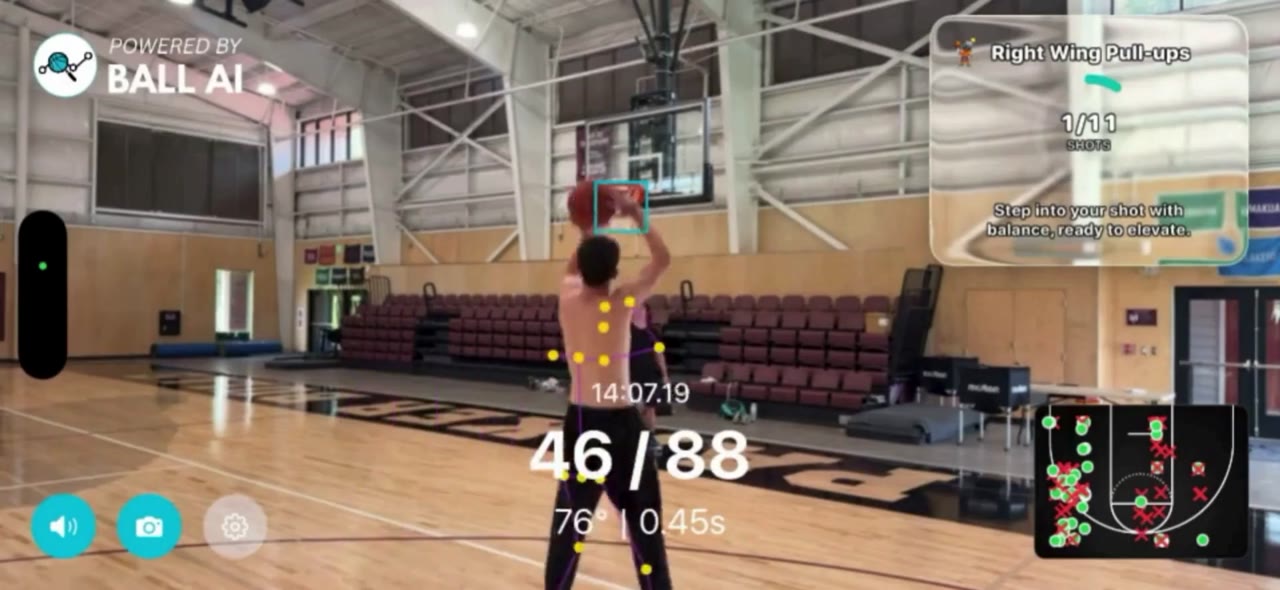
Parents searching for youth basketball training usually land in the same tangle: a camp brochure, a trainer's Instagram, and a kid who only gets two team practices a week. The question is not which one is best forever. It is which mix fits this season, and how to keep the work going on the days nobody is paid to watch.
This guide compares home practice, camps and group programs, and private trainers, then shows how to combine them. For a weekly home habit and age-right drills, see how to help your kid get better at basketball and basketball drills for kids at home, by age. For the trainer-only decision in more depth, see is a private basketball trainer worth it. If you want the minutes written out, use the basketball practice plan template.
What youth basketball training actually means
Youth basketball training is any structured work outside of school or travel-team practice that builds skills on purpose: handles, shooting form, footwork, finishing, and decision-making. It can look like fifteen driveway minutes, a week-long camp, a weekly academy class, or a one-on-one session with a trainer.
What it is not: random pickup with no plan, or a long Saturday that leaves them sore and bored of the ball. Consistency and feedback beat volume. A basketball training program for youth should answer three parent questions before you pay or clear the garage:
- What skill are we building this block? For example, the weak hand, form shooting, or layup footwork.
- How will we know it worked? Makes, clean reps, coach notes. Not vibes alone.
- Does this still leave room for rest and fun?
If a program cannot answer those, it is calendar filler, not training.
Option 1: Home practice (the base layer)
Home practice is the only option you can run most weeks without a registration form. It is also the easiest to fake unless someone sets a short plan and a finish line.
When home fits best
- Between team practices, during busy school weeks, or when travel is light
- Building habits for ages roughly 8 to 15 who can follow a short sequence
- Skills that need high reps and quiet focus: ball handling, form shooting, pivots, slides
- Families who want control over schedule and intensity
What good home training looks like
- Fifteen to twenty-five minutes for younger kids; up to about forty for older ones, a few days a week
- One focus per day (handles Monday, form Tuesday, footwork Thursday)
- A rep or make target so the session ends cleanly
- You as setup crew, ball size, clear space, water, not as the referee counting every miss
A ready mixed workout lives in how to get better at basketball at home. Age-banded drills with how-tos and targets are in the drills-by-age guide. Timed 30-, 45-, and 60-minute versions are in the practice plan template.
Limits of home alone
- No live defense or game pace unless siblings or friends show up
- Form can drift if nobody ever watches with a clear eye
- Motivation dips without a record or a coach's voice
Home is the foundation. It rarely is the entire building.
Option 2: Camps, clinics, and group academies
Camps and multi-week academies put your kid in a gym with other players, a shared curriculum, and someone else running the clock. Public search results for youth basketball training programs are full of these: multi-city academies, school-break camps, and after-school classes.
When camps and group programs fit best
- Off-season or school breaks when you want volume and structure in a short window
- Players who need competition, teammates, and game-like reps
- Kids new to organized ball who need a fun test drive before committing to travel
- Families who want coach-led stations without booking one-on-one hours
What good group training looks like
- Clear age or grade bands, not one pile of everyone from 7 to 14
- Coaches who teach, not only keep kids busy and injury-free
- A plan that builds week to week, especially for academies, not only scrimmage
- Reasonable coach-to-player ratios and transparent safety and background-check norms
Limits of camps alone
- Large groups mean less individual correction
- One week of intensity does not replace months of quiet reps
- Celebrity-name camps often sell the logo more than the teaching
- Skills fade if nothing happens the Monday after camp ends
Use camps for energy, competition, and a curriculum burst. Plan the driveway weeks that follow, or the burst evaporates. Gift timing for a camp certificate, and ball-size notes, live in the basketball gift guide.
Option 3: Private or small-group trainers
Private training is individualized feedback: one coach, a specific weakness, and reps with correction. Small groups sit between private and camp. They cost less per hour than one-on-one, and they are still more personal than a twenty-kid station.
When a trainer fits best
- A clear mechanical issue, such as a shot elbow, left-hand panic, or footwork on finishes
- Tryout prep on a short timeline where focus matters more than social volume
- Older youth who can apply cues and do homework between sessions
- When team practice is too crowded to fix one kid's form
What good private training looks like
- An assessment and a plan, not the same generic circuit every week
- Corrective feedback you can hear, such as a guide hand that is pushing, rather than only "again"
- Homework you can run at home between paid hours
- Respect for load: knees, schedule, and not stacking hard sessions on game days
Limits of trainers alone
- Cost and calendar add up fast. There is a deeper look in is a private basketball trainer worth it.
- Pure one-on-one can miss live reads and competitive pressure
- A session that only runs drills, without teaching, transfers poorly to games
Private work is a scalpel. Home and team practice are still the weekly muscle.
How to combine them
Most families do better with a stack than a single silver bullet.
| Season situation | Sensible mix |
|---|---|
| In-season, two practices a week | Short home sessions 2 to 3 days. Skip extra camps. A trainer only if one skill is stuck. |
| Quiet stretch or off-season | Home base, plus an optional weekly academy or small group. Add a camp week for competition. |
| Clear form problem | A short private block, or a small group, plus daily home homework the trainer assigns. |
| New to basketball | A low-pressure camp or class first, then a home habit. Delay heavy private spend. |
| Tryouts in a few weeks | Focused private or small-group work on the gap. Keep home short and specific. Protect sleep. |
A simple rule: home almost always stays on. Camps and trainers rotate on and off based on the gap you are closing.
Red flags, any format
Walk away, or at least ask harder questions, when you see:
- Guarantees of making the team, playing in college, or improving on a short countdown
- No age bands, or teens and second-graders in the same station with the same cues
- Sessions that are only scrimmage with no skill teaching
- Trainers who cannot explain why a drill exists or what to practice between visits
- Pressure to buy gear, sensors, or add-ons before a plan is clear
- Your kid dreading the driveway or the gym every time. Burnout beats more training.
Good youth basketball training leaves them tired in a useful way and still willing to pick up the ball tomorrow.
How parents can judge progress without becoming the referee
You do not need a coaching license. You need a few honest signals over three to six weeks:
- Consistency: Did the planned sessions happen most weeks?
- Cleaner reps: Same drill, fewer travels, better weak-hand control, quieter feet
- Makes in range: Close shots and free-throw form before sidewalk threes
- Coach notes: What does the school or club coach notice in practice?
- Attitude: Are they more confident with the ball, or only more exhausted?
Write numbers in a notebook or keep a simple video from the same angle once a week. Progress is usually quiet. Looking for fireworks every Tuesday is how parents and kids both quit.
Where an AI training app can sit in the mix
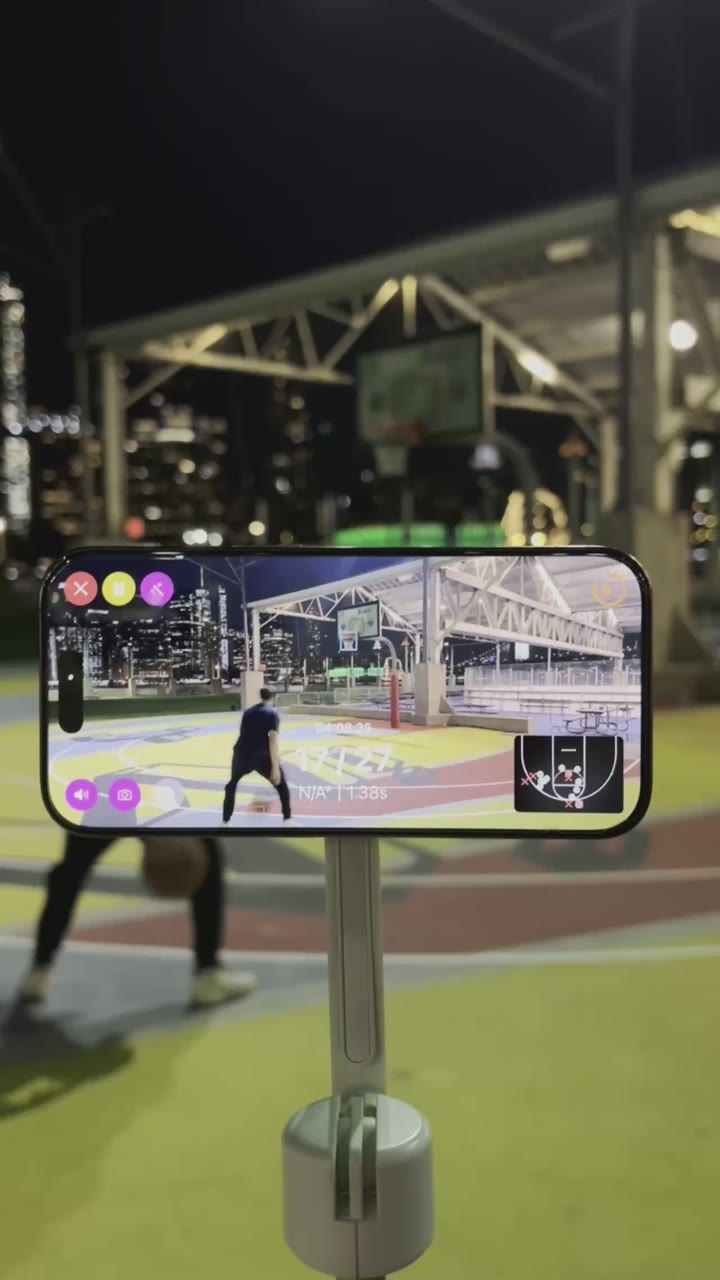
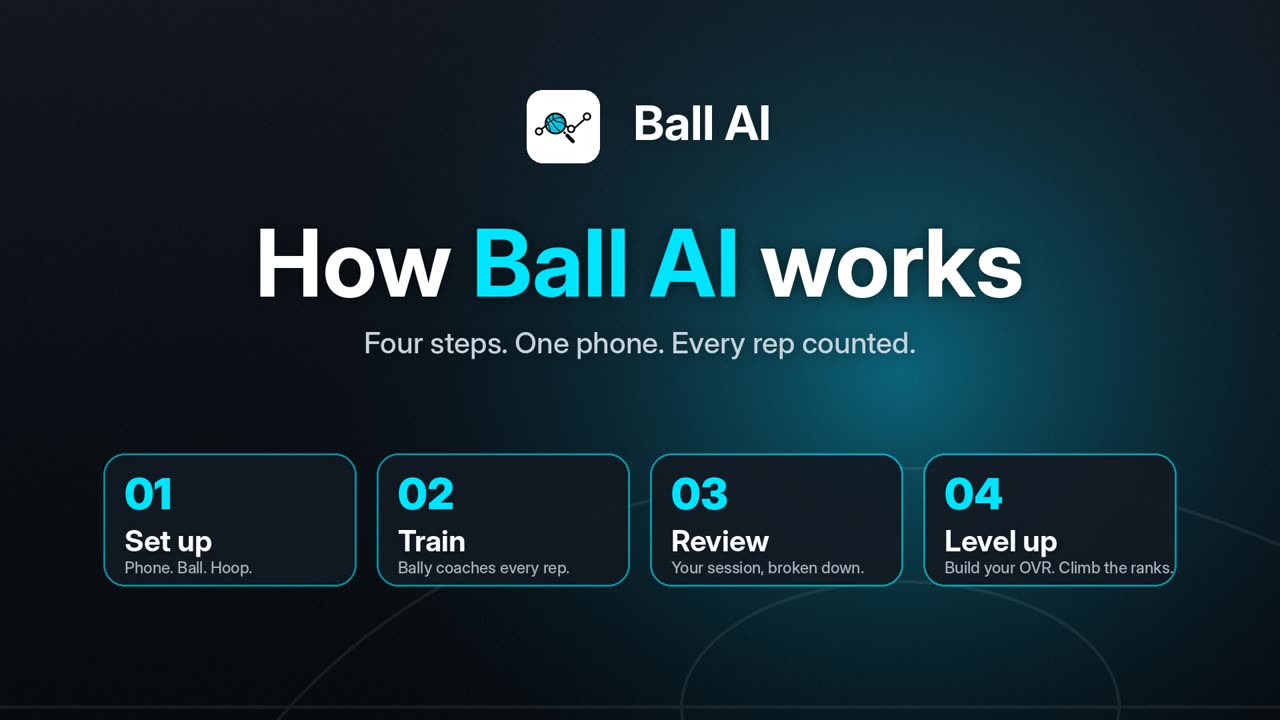
If home days are the weak link, with no plan, no record, and no feedback, an AI basketball training app can help fill that gap. Ball AI is built for players who train with a phone camera on iOS or Android. It tracks shots and dribbles, structures workouts, and gives feedback without smart balls or extra sensors. Parents use it as an optional layer between team practices, camps, and trainer sessions, not as a replacement for a coach or for live competition.
Straight answers on ages, the camera, and how it fits kids' home practice are in the basketball training app for kids FAQ. Gift timing and ball-size notes for players who already train live in the basketball gift guide.
A one-page decision checklist
Before you enroll or hire, answer these:
- What is the one skill or habit gap this month?
- Does home practice already happen most weeks? If not, fix that first.
- Do we need competition and social energy (camp or group) or individual correction (private or small group)?
- What will we measure for three weeks after the camp or trainer block ends?
- Is there still room for rest, school, and liking the game?
Youth basketball training works when the calendar matches the gap, and when the driveway still gets used after the brochure is in the recycling bin.
Questions parents ask
What does youth basketball training include?
Youth basketball training is structured work outside of school or travel-team practice: handles, shooting form, footwork, finishing, and decision-making. It can be a short driveway session, a camp, a group class, or time with a private trainer. Random pickup with no plan is not training.
Is home practice enough for a youth player?
Home practice is the base layer you can run most weeks, and it should stay on the calendar. It is rarely the whole plan. Home work misses live defense unless friends show up, and form can drift if nobody watches. Camps add competition. A trainer adds individual correction. Most families do better with a stack than with one option alone.
How do camps and private trainers fit with home practice?
Keep home sessions almost every week. Add a camp or group program when you want competition and a short burst of structure, then plan the driveway days after it ends. Add a private trainer or a small group when one skill is stuck, and do the homework between sessions. Skip extra camps in-season if they already have two team practices.
What are red flags in a youth basketball program?
Walk away from guarantees of making a team, playing in college, or improving on a short countdown. Also look hard at programs with no age bands, sessions that are only scrimmage, trainers who cannot explain a drill, and pressure to buy gear before a plan is clear. If your kid dreads every session, the load is wrong.
How can parents tell if the training is working?
Over three to six weeks, look at whether the planned sessions happened, whether reps got cleaner, whether close shots and free-throw form improved before long shots, and what the team coach notices. Write numbers down or keep a simple video from the same angle. Progress is usually quiet.