 BALL AI
The short answer
Most kids are ready for simple organized basketball around age 6, with a smaller ball and a lower hoop. Ages 4 and 5 can play with a ball for fun. Structured skill training fits best from about 8 to 12, and experts say not to focus on basketball alone until at least 14. Starting at 10, 12 or even later is normal.
Sources: the American Academy of Pediatrics (HealthyChildren.org) and the NBA and USA Basketball Youth Basketball Guidelines.
Age by age: what basketball should look like
USA Basketball's player development model splits youth basketball into stages. The ages overlap on purpose, because kids develop at different speeds.
| Age (approx.) | USA Basketball stage | What it looks like |
|---|---|---|
| Up to 6 | Active Start | Play. Bouncing, chasing and catching a ball. Lots of different sports. |
| 6 to 9 | Fundamentals | Basketball once or twice a week, other sports the rest. Small-sided games, simple rules. |
| 8 to 12 | Learning to Train | The best window to learn real basketball skills. More practice than games. |
| 12 to 15 | Training to Train | Build fitness and sharpen skills. Team play matters more. |
| 14 to 17 | Training to Compete | More serious training for kids who want it. |
Source: USA Basketball Youth Development Guidebook (long-term athlete development stages).
Ages 4 and 5: play first
Kids this age learn by playing. Keep sessions short and the hoop low. A ball they can hold with two hands and a few minutes of bouncing and shooting at a mini hoop is plenty. Pediatric guidance says sports with fast decisions and teamwork, like basketball, work best for young kids when the rules are simplified.
Ages 6 to 9: simple organized basketball
By around 6, most kids have the basic motor skills for simple organized sports (AAP). This is a good time for a rec league or a skills clinic.
What the NBA and USA Basketball recommend for ages 7 and 8: a size 5 ball (27.5"), an 8-foot hoop when possible, about one practice and one game a week, and equal playing time.
Keep other sports in the mix. USA Basketball's model suggests basketball once or twice a week at this stage, with other activity on the other days.
Ages 8 to 12: the skill-building window
USA Basketball calls this stage "Learning to Train." It's the stage built for learning all the basic basketball skills, with about 70% of time spent practicing and 30% competing.
For ages 9 to 11, the guidelines recommend a size 6 ball (28.5"), a 9-foot hoop when possible, about two practices a week, and no 3-pointers in games.
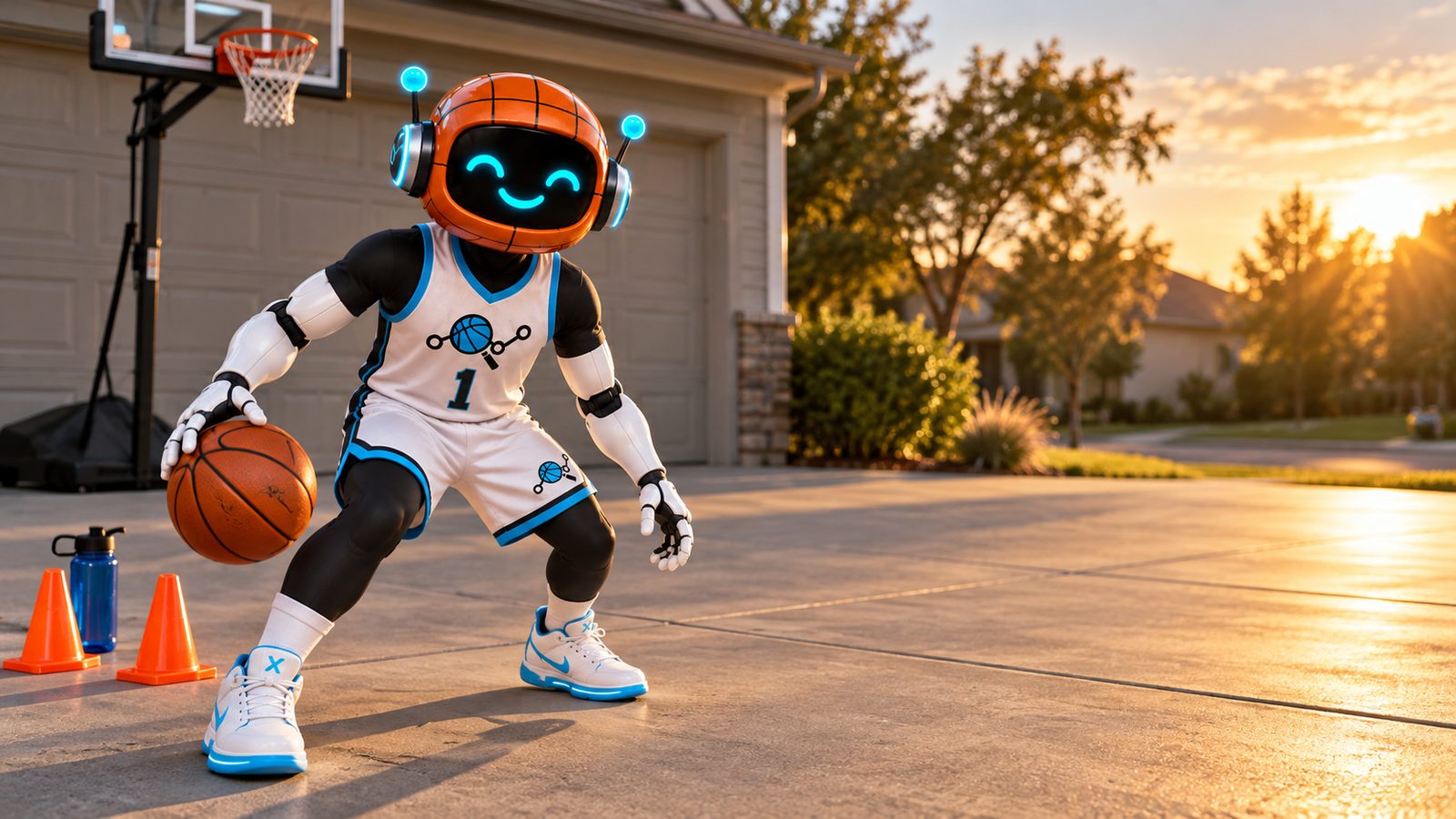
This is when short, regular home practice helps most. Ten to fifteen focused minutes on ball handling and close-range shooting, a few days a week, adds up over a season. Want a starting list? See the 5-skill beginner checklist.
Ages 12 to 14: stepping up
Middle school teams and club programs usually start mattering here. The guidelines for ages 12 to 14 call for two to four practices a week. Practice still outweighs games: USA Basketball suggests about 60% training and 40% competition at this stage.
Is my kid too old to start?
No. A kid starting at 10, 12 or 13 is not behind for good. Pediatric research notes that growth spurts and the timing of puberty change coordination and size a lot between ages 10 and 15, so who looks best at 11 often changes by 15. Late starters who practice the basics regularly can close the gap. It takes months and seasons, not weeks.
When should kids start AAU or travel basketball?
Eligibility starts young. AAU runs divisions from 7U (1st grade) up. Being eligible doesn't mean a kid is ready for a heavy tournament schedule.
The NBA and USA Basketball guidelines recommend delaying single-sport specialization until at least age 14, and note that top athletes often played multiple sports when they were young. For most families, more practice than games is the rule through middle school.
How to tell your kid is ready
Look for these, not a birthday:
- They ask to play or shoot around on their own.
- They can follow a two- or three-step instruction.
- They can dribble a few times in a row without chasing the ball.
- They have fun even when the shot doesn't go in.
If two or three of these fit, try a clinic, a rec league or short practice at home.
Practicing at home at any age
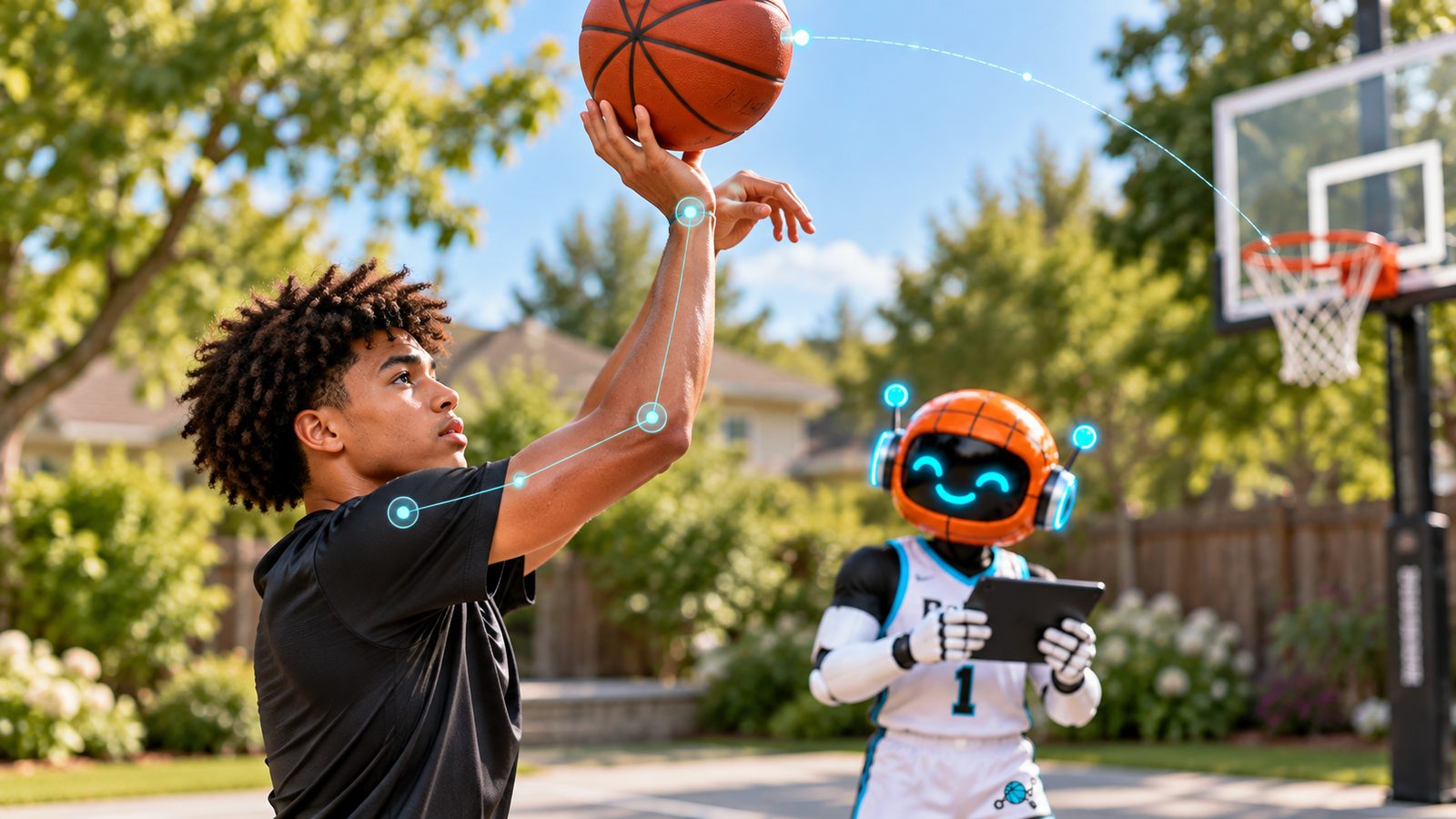
Kids don't need a gym to start. A ball, a hoop or a wall, and a short plan are enough. For older beginners who want structure, an app can help. Ball AI is an AI basketball training app on iPhone that uses the phone camera to follow drills and track reps and shots, so practice at home has a plan and a record. Younger kids do best with a parent helping set it up.
Related: How can my child practice basketball at home? and Basketball drills for kids at home.
Questions parents ask
What age should kids start basketball?
Most kids are ready for simple organized basketball around age 6 (American Academy of Pediatrics). Ages 4 and 5 can start with play-based basketball using a smaller ball and a lower hoop.
What age should kids start training for basketball?
Structured skill training fits best from about 8 to 12, the stage USA Basketball calls Learning to Train. Keep it more practice than games.
What age do kids start AAU basketball?
AAU divisions start at 7U (1st grade). The NBA and USA Basketball recommend delaying single-sport specialization until at least age 14, so a light schedule makes sense for younger kids.
Is 12 too late to start basketball?
No. Size and coordination change a lot between ages 10 and 15. Kids who start at 12 and practice the basics regularly can catch up over a few seasons.
What size basketball should a young kid use?
The NBA and USA Basketball recommend a size 5 ball (27.5 inches) for ages 7 to 8 and a size 6 ball (28.5 inches) for ages 9 to 11.